How to Start an E-Commerce Business in 2026
How to start an e-commerce business in 2026: choosing a platform, picking a model, and the real costs backed by current market data.

Talal Emran
Web Developer & Designer
Published
10 min read
Global e-commerce sales are set to hit roughly $6.88 trillion in 2026, and the barrier to launching a store has never been lower. That combination — a growing market and a low technical floor — is exactly why so many new stores fail within the first year: it’s easy to start, but the mechanics of actually succeeding get skipped in the rush to launch.
This guide covers what actually matters when starting an e-commerce business in 2026: choosing the right model, picking a platform without getting lost in feature comparisons, and understanding the real costs before you commit.
How We Evaluated This Guide
The recommendations here are built around three filters: the business model has to be viable for someone starting with limited capital, the platform advice has to reflect actual 2026 pricing and market share rather than affiliate-driven “best of” lists, and every cost figure has to come from verifiable industry reporting, not rounded guesses.
The State of E-Commerce in 2026
The market context matters before you pick a niche or a platform, because it tells you where the real growth is happening and where you’d be fighting for scraps.
| Metric | Figure |
|---|---|
| Global e-commerce sales, 2026 | ~$6.88 trillion |
| Mobile share of global e-commerce | 59% (~$4.01 trillion) |
| Global digital buyers, 2026 | 2.86 billion |
| E-commerce share of total global retail | 21.1% |
| Average cart abandonment rate | 70.19% |
| Businesses ranking AI as top tech priority | 84% |
Two numbers here should shape your entire launch strategy. First, mobile commerce now accounts for roughly 59% of total e-commerce sales, worth around $4.01 trillion — if your store isn’t built mobile-first, you’re optimizing for a shrinking minority of your own traffic. Second, cart abandonment averages over 70%, costing US retailers an estimated $705 billion annually, which means checkout friction isn’t a minor detail to fix later — it’s one of the biggest levers you have from day one.
“Not every lost sale is avoidable. Some shoppers are just browsing. But when checkout friction, slow load times, and missing localization features get in the way, your ecommerce platform matters.”
Choosing Your E-Commerce Model

Before touching a platform, decide how you’re actually going to source and sell products. This decision shapes everything downstream — your margins, your startup capital, and how much operational work you’re signing up for.
- Dropshipping. Lowest upfront cost, no inventory risk, but thin margins and less control over shipping times and product quality. Best for testing a niche before committing capital.
- Print-on-demand. Similar to dropshipping but for custom-designed goods — apparel, mugs, prints. Best for creators and designers who already have an audience or a distinct visual brand.
- Wholesale/private label. You buy inventory upfront (or have it manufactured under your own brand) and control quality and margins directly. Best for anyone ready to commit real capital for meaningfully better margins.
- Digital products. Courses, templates, software, or downloadable assets — no shipping, no inventory, and the highest margins on this list. Best for people with existing expertise to package, not for those starting from a blank niche idea.
Best for most first-time founders: starting with dropshipping or print-on-demand to validate demand cheaply, then transitioning to wholesale or private label once a product proves it sells.
Choosing a Platform Without Getting Lost in Comparisons
Every “best e-commerce platform” list reads like a tie between six options. In practice, for most first-time founders, the decision is narrower than the listicles suggest.
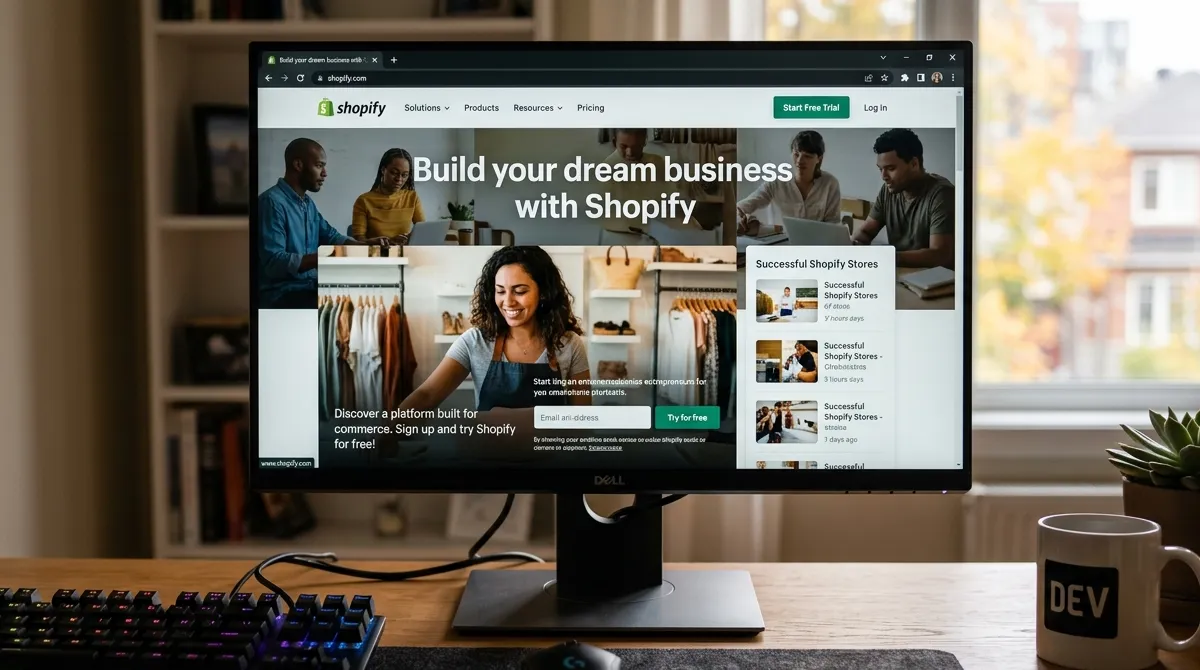
Shopify is widely considered the best platform for beginners because it’s easy to use, includes AI tools for writing product descriptions and designing your site, and offers strong customer support. That’s not a controversial pick — it’s reflected in the numbers: Shopify alone accounts for more than 14% of US e-commerce, and it powers over four million stores, the largest ecosystem of any platform on this list.
But “most popular” isn’t “correct for everyone.” Here’s where the alternatives actually make sense:
- WooCommerce — provides full ownership and flexibility, but requires strong technical management and hosting discipline. Best for developers or technical founders who want full control and don’t mind managing their own hosting.
- BigCommerce — often better suited for businesses with complex catalogs, B2B needs, or flexible payment requirements. Best for stores that will outgrow a simple catalog structure quickly.
- Wix Studio — works well for design-driven brands that prioritize visual experience over operational complexity. Best for portfolio-style or highly visual brands where the store is secondary to the aesthetic.
- Adobe Commerce — offers the deepest technical capabilities but is usually too expensive and complex for most SMBs. Skip this one unless you’re already running a large catalog with a dedicated dev team.
Best for a first store: Shopify, specifically because its total cost of ownership runs meaningfully better than competitors on average and its checkout converts noticeably higher — and checkout conversion is exactly the lever that matters most given how high cart abandonment runs industry-wide.
Platform vs. Marketplace: A Distinction Worth Understanding
Shopify and Amazon solve different problems, and conflating them is a common early mistake. Amazon is a marketplace — it gives sellers access to a large built-in audience but charges referral fees that can run into the mid-teens percentage per sale, limits brand control, and places sellers in direct competition with other listings and Amazon’s own products. Shopify is an e-commerce platform — it gives brands a fully owned online store, complete control over customer experience and data, and no referral fees.
Many successful stores use both: a marketplace for reach and discovery, a branded platform store for margin and customer ownership. Starting exclusively on a marketplace means you never build an owned customer list — starting exclusively on your own platform means you’re doing all your own traffic generation from zero.

What Starting Actually Costs
Founders underestimate the operating costs far more often than the platform fee itself. Most new businesses spend a few thousand dollars in the first year when accounting for monthly fees, payment processing, and additional tools — the subscription is rarely the biggest line item.
Budget across these categories realistically:
- Platform subscription. Entry-level plans run affordable, but don’t budget for the cheapest tier long-term — you’ll likely need app integrations that push you into a mid-tier plan within months.
- Payment processing fees. Typically 2–3% per transaction, on top of your subscription. This scales with revenue, so model it as a percentage, not a flat number.
- Apps and integrations. Email marketing, reviews, upsells, inventory sync — these add up quickly and are the most common source of budget overrun.
- Marketing and customer acquisition. Often the largest cost of all, and the one first-time founders budget for last instead of first.
- Product sourcing or inventory (if not dropshipping). Your largest single cash outlay if you’re moving to wholesale or private label.
Building for Mobile and Checkout From Day One

Given that mobile commerce accounts for roughly 59% of total e-commerce sales, treating mobile as an afterthought isn’t a minor oversight — it’s optimizing against the majority of your future traffic. The gap between apps and mobile web is stark: shopping apps convert at meaningfully higher rates than mobile websites, and users spend far longer per session in an app than in a mobile browser.
You don’t need a native app on day one — most new stores shouldn’t build one that early. But you do need a mobile-responsive theme, a checkout that doesn’t force account creation, and page load times fast enough that impatient mobile shoppers don’t bounce before checkout even loads.
A Launch Sequence That Actually Works
- Validate before you build. Confirm demand — through pre-orders, a waitlist, or a small paid ad test — before committing to inventory or a fully built-out store.
- Launch narrow, not broad. A tightly focused product line converts better and is easier to market than a sprawling catalog with no clear identity.
- Fix checkout friction before chasing more traffic. With cart abandonment running above 70% industry-wide, improving conversion on existing traffic is usually cheaper than acquiring new traffic.
- Add one sales channel at a time. Master your primary platform before spreading into marketplaces, social commerce, or a second storefront.
- Reinvest early revenue into retention, not just acquisition. A returning customer costs far less to sell to than a new one, and most first-time founders underinvest here.
Where This Advice Falls Short

To be fair to anyone reading this as a full business plan: it isn’t one, and a few real limits are worth naming.
- Platform choice matters less than product-market fit. No platform recommendation here fixes a product nobody wants to buy.
- Cost estimates are directional, not a guarantee. Actual first-year costs vary heavily by niche, ad costs in your category, and how much you outsource versus DIY.
- Marketplace fee structures change. Referral fee percentages and platform policies shift, sometimes with little notice — verify current rates before building a margin model around them.
- This guide assumes you’re starting from zero. If you already have an audience, existing supplier relationships, or capital for inventory, several of these sequencing recommendations should be reordered or skipped.
The Bottom Line
Starting an e-commerce business in 2026 is easier than it’s ever been from a technical standpoint, and harder than ever from a competitive one. The founders who succeed aren’t the ones who pick the “perfect” platform — they’re the ones who validate demand early, fix checkout friction before chasing more traffic, and treat mobile as the default experience rather than an afterthought.
Official Platform Links
- Shopify — the hosted e‑commerce platform mentioned throughout this guide.
- WooCommerce — the open‑source WordPress plugin for full‑control stores.
- BigCommerce — enterprise‑grade platform for growing businesses.
- Wix Studio — drag‑and‑drop builder for design‑focused brands.
- Adobe Commerce (Magento) — robust open‑source/hosted solution for large catalogs.
FAQ
What’s the cheapest way to start an e-commerce business in 2026? Dropshipping or print-on-demand, since neither requires upfront inventory investment — your main costs are the platform subscription and initial marketing spend to validate demand.
Is Shopify still the best choice for beginners in 2026? For most first-time founders, yes — its checkout converts noticeably better than competitors on average, and given how costly cart abandonment already is industry-wide, that conversion advantage compounds quickly.
Should I sell on Amazon or build my own store first? They solve different problems. A marketplace gives you built-in traffic at the cost of margin and brand control; your own store gives you margin and customer ownership but requires you to generate your own traffic from the start.
How much should I actually budget for the first year? Plan for a few thousand dollars minimum once you account for subscription fees, payment processing, apps, and marketing — the platform fee itself is rarely the largest line item.
Do I need a mobile app to compete in 2026? Not at launch. A fast, mobile-responsive store with frictionless checkout matters far more early on than a native app — apps become worth the investment once you have consistent repeat traffic to justify the build.