The 2026 Drop Shipping Guide for Beginners
Drop shipping in 2026 is harder to win but far from dead. This guide covers the model, supplier options, real margins, ad costs, and the mistakes that sink first-time stores.

Talal Emran
Web Developer & Designer
Published
10 min read
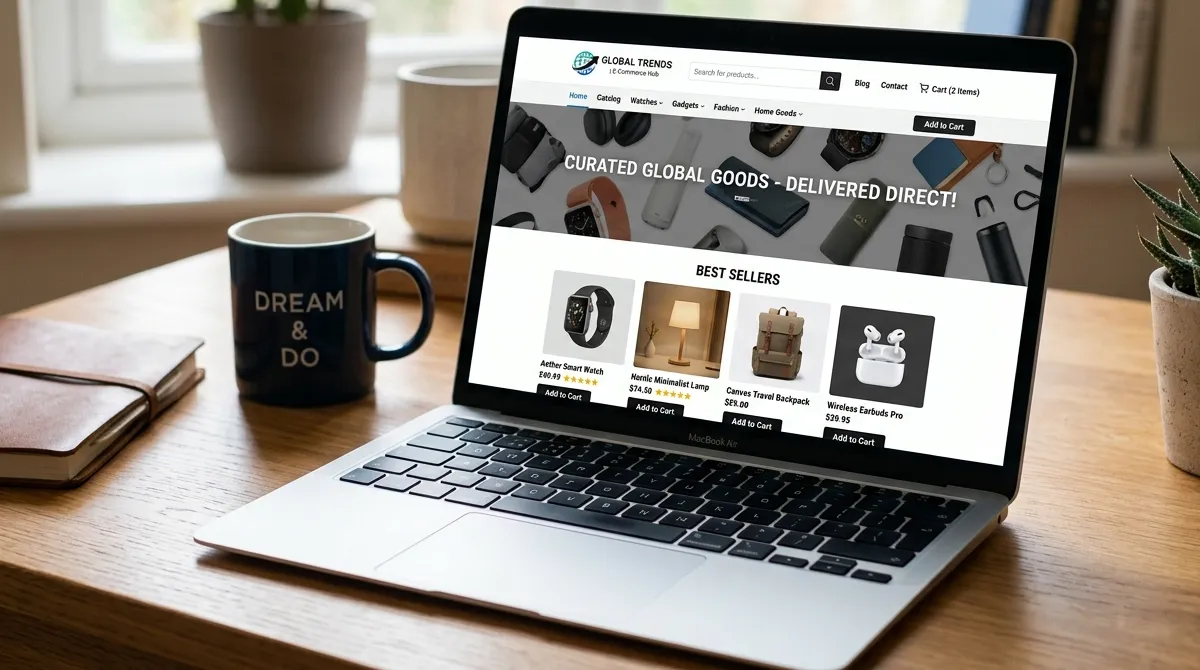
Drop shipping is the most misunderstood business model in e-commerce. For years it was sold as a push-button path to passive income; in 2026 it’s neither push-button nor dead. The stores that win treat it like a real retail operation with a specific logistics twist — they control branding, marketing, and customer experience while outsourcing only inventory and shipping.
This guide is the practical, no-hype version. It covers what drop shipping actually is in 2026, whether it’s still viable, how to pick a niche and suppliers, what the real margins look like after ad spend, and the mistakes that quietly sink most first stores.
How We Evaluated This Guide
Same filters we apply to every e-commerce topic on UpNorthHub:
- It has to reflect 2026 reality, not 2019 folklore. The “find a $2 product, sell it for $30 on Facebook” playbook is largely gone; ad costs, platform rules, and customer expectations have all shifted.
- It has to be honest about margins. Supplier price is not your cost. Ad spend, apps, payment fees, and refunds decide whether you profit.
- It has to name who should not do this. Drop shipping is a poor fit for a meaningful share of people who try it, and saying so upfront saves more money than any tactic.
Where a figure is approximate or moves with platform policy, we say so.
The State of Drop Shipping in 2026
The broader market sets the stage. Global e-commerce sales are on track for roughly $6.88 trillion in 2026, mobile commerce is the majority of that at around 59%, and cart abandonment still averages above 70% industry-wide. Those three numbers define the playing field: a huge market, a mobile-first buyer, and a checkout that leaks most of the customers you pay to attract.
| Metric | Figure | Why it matters |
|---|---|---|
| Global e-commerce, 2026 | ~$6.88 trillion | Large enough market to support niche stores |
| Mobile share | ~59% | Your store must be mobile-first, not mobile-friendly |
| Cart abandonment | ~70.19% | Checkout friction silently eats ad budget |
| Typical dropship margin | 10–30% pre-ad | Ad spend is what usually removes the profit |
| Paid social CPM (range) | Varies widely by platform/season | Your single biggest variable cost |
The honest takeaway: the opportunity is real, but the margin buffer is thin, and paid acquisition is where most of that buffer disappears.
Is Drop Shipping Still Viable in 2026?
Yes — with a narrower definition of success than the gurus use. It is viable as:
- A low-capital way to validate a product or niche before committing to inventory.
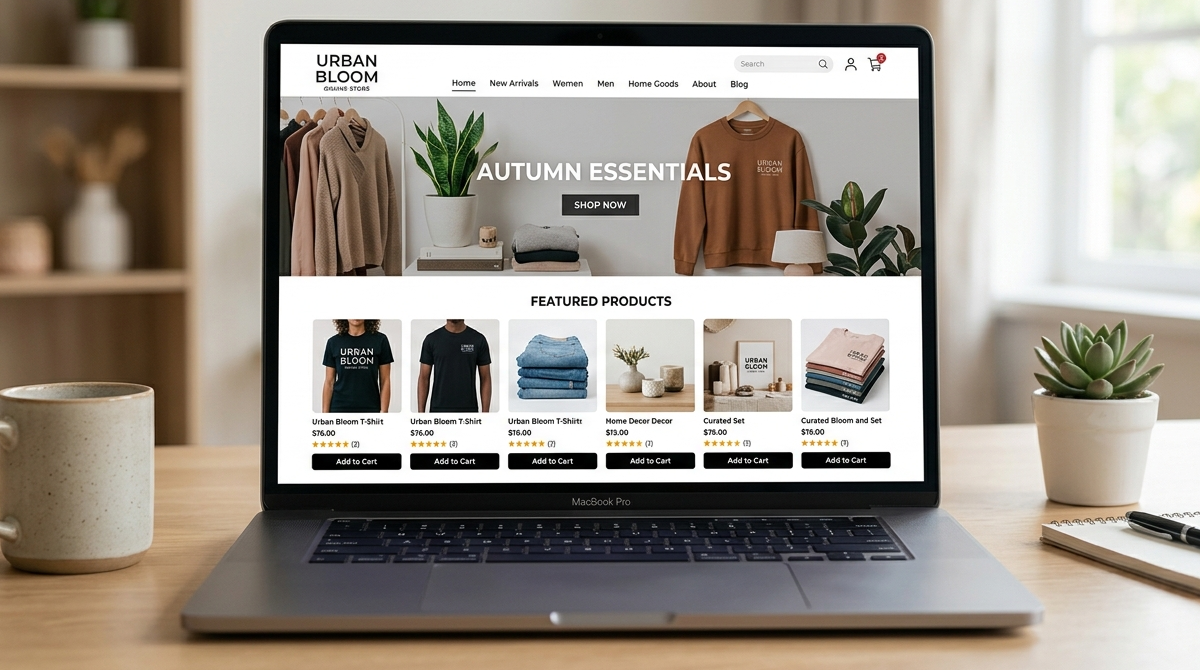
- A branding play, where you build a real store, a real audience, and a real repeat-customer base rather than a disposable one-product page.
- A complement to other channels, not the entire business.
It is not viable as a set-and-forget income machine. Ad platforms have gotten better at detecting thin stores, customers have gotten better at spotting them, and margins have compressed as more sellers chase the same winning products.
“The stores that survive 2026 aren’t the ones with the cheapest supplier. They’re the ones whose ad creative and post-purchase experience are good enough that customers come back.” — pattern repeated across experienced operators we spoke with
Step 1: Pick a Niche You Can Actually Defend
“Everything for everyone” is the fastest way to fail. A defensible niche has three traits:
- Passionate or problem-driven demand — people actively searching for a solution, not casual browsers.
- Room for a brand — products you can name, package, and talk about consistently.
- Healthy margin after reality — enough per-order profit to absorb a $5–$15 customer acquisition cost.
Good 2026 examples: pet gear for specific breeds, mobility aids, hobbyist tools, eco-conscious home goods, and fitness accessories with a clear use case. Bad examples: generic phone cases, fidget toys with no angle, and anything where five thousand other stores already sell the identical listing.
Step 2: Choose Suppliers Without Getting Burned
Your supplier determines shipping time, product quality, and how often you apologize to customers. The major options differ in speed, location, and control.
| Supplier | Best For | Shipping Origin | Notes |
|---|---|---|---|
| AliExpress | Testing cheap products fast | China | Slowest; fine for validation, weak for scale |
| CJdropshipping | Automated order forwarding | China + some US | Warehousing option reduces delivery time |
| Zendrop / Spocket | Faster US/EU delivery | US/EU + global | Higher unit cost, better delivery promise |
| Printful / Printify | Print-on-demand apparel | Print-to-order globally | Great for creators; you design, they ship |
| Local 3PL + brand | Scaling a real brand | Your region | You hold or pre-buy stock for speed |
The single most important supplier decision is delivery time. A 3–5 day promise converts and retains; a 20–30 day mystery shipment generates refunds and chargebacks that erase margin. As you validate, move from slow-but-cheap to faster-but-pricier suppliers.
Step 3: Build the Store on the Right Platform
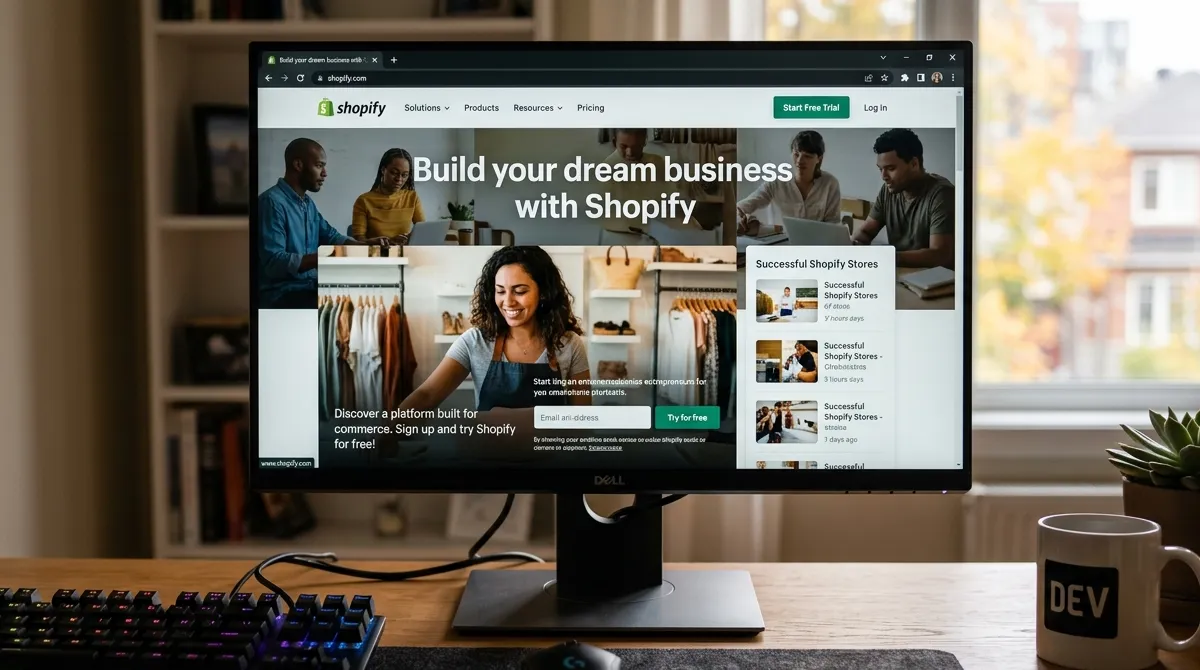
For most beginners, Shopify remains the default: it removes hosting, security, and checkout complexity, and its checkout (Shop Pay) converts better than almost any self-served alternative — which matters directly given how high cart abandonment runs. If you use Shopify Payments, you avoid the extra per-order transaction fee; outside supported regions that fee is permanent.
Alternatives worth knowing:
- WooCommerce — if you’re technical and want full control and lower long-run cost.
- BigCommerce — for larger catalogs or B2B needs.
- Squarespace / Wix — if the store is secondary to a content brand.
Whatever you pick, the store itself must be mobile-first, fast, and trustworthy. A slow, cluttered store spends ad money to send people into a leaky bucket.

Step 4: Research Products That Can Actually Sell
Winning products in 2026 share traits:
- A clear, demonstrable benefit (watch it solve a problem in the ad).
- An emotional or identity hook (pet parents, fitness goals, home organization).
- A price point that leaves margin after a realistic ad cost — typically $20–$80 for impulse-leaning purchases.
- Low enough return risk that refunds don’t eat the profit.
Research is watching what’s already selling, then differentiating — better creative, better bundling, better post-purchase care — rather than copying a listing pixel-for-pixel. Copying is how you end up in a race to the bottom on price.
Step 5: Market on the Channels That Fit the Product
Two broad paths:
- Paid social (Meta, TikTok). Fastest path to volume and the fastest way to lose money. Treat ad spend as an experiment with a strict stop-loss; kill creatives that don’t hit a target return within a test budget.
- Organic (TikTok/Instagram content, SEO, communities). Slower but compounds and doesn’t vanish when the ad account gets flagged. Best for building a brand rather than a flash-in-the-pan store.
Most viable stores run both: organic for brand and retention, paid for reach and speed — with paid tightly disciplined.
Step 6: Understand the Real Margin
A typical simplified math for a $35 product:
- Supplier + shipping: ~$12
- Payment processing (≈3%): ~$1
- App/subscription allocation: ~$2
- Gross before marketing: ~$20
- Paid acquisition at ~$10/order: net ~$10
That ~$10 is your buffer for refunds, chargebacks, and the months you spend optimizing. If your product can’t support a realistic acquisition cost, the model doesn’t work at your price — raise price, cut supplier cost, or pick a different product. There is no workaround for negative unit economics.
Common Mistakes That Sink First Stores
- Chasing “winning products” instead of a brand. Trends expire; a brand outlasts them.
- Ignoring delivery time. Slow shipping is the top driver of refunds and bad reviews.
- Unrealistic ad expectations. Assuming the first campaign profits is how budgets disappear in a week.
- No retention plan. Acquiring once is expensive; a store with no repeat-purchase logic leaks its best asset.
- Skipping customer service. In drop shipping, you are the brand customers blame, not the factory.
Legal and Practical Guardrails

- Taxes. Sales tax / VAT obligations vary by where you and your customers are. Don’t treat “I’m just drop shipping” as an exemption.
- Intellectual property. Selling trademarked or patented items via a supplier listing is a fast path to bans and liability.
- Consumer protection. Delivery promises, refunds, and clear policies aren’t optional—they’re often legally required and operationally essential.
- Supplier diligence. Order samples. A product you’ve never held is a liability you’re selling as your brand.
Where This Guide Falls Short
- Ad costs are volatile. A CPM that works this quarter can double next quarter; any margin model should include a cushion.
- Supplier performance varies. The same platform can be excellent for one product and terrible for another.
- “Viable” depends on your skills. Strong creative or content ability changes the math more than any supplier choice.
- This assumes a legitimate store. The spammy, trademark-infringing version of drop shipping is excluded deliberately—it’s a different (and riskier) game.
The Bottom Line
Drop shipping in 2026 rewards operators, not passengers. The model still works as a low-capital way to test and build a branded store, but the profit lives in three places: a defensible niche, fast and reliable fulfillment, and disciplined marketing that respects real unit economics. Pick a niche you can own, move to fast suppliers as you validate, build on a platform whose checkout doesn’t leak your traffic, and treat every order as the start of a relationship rather than a one-time transaction.
The stores that fail treat drop shipping as a loophole. The stores that last treat it as retail with a specific logistics arrangement — and they build everything else like a real business.
Official and Supplier Links
- Shopify — the hosted platform most beginners use to run a drop shipping store.
- AliExpress — large supplier marketplace for low-cost product testing.
- CJdropshipping — order automation and warehousing to shorten delivery.
- Zendrop — US/EU-focused fulfillment with faster shipping.
- Printful — print-on-demand fulfillment for custom apparel and goods.
FAQ
Is drop shipping still worth it in 2026? For testing a product or building a branded store with low upfront capital, yes. As a passive, effort-free income source, no — ad costs and competition have removed that version of the model.
How much money do I need to start? Enough to cover a platform subscription, a small ad test budget (often a few hundred dollars), and samples. The danger isn’t the startup cost; it’s continuing to fund ads on a product with negative unit economics.
Which supplier should a beginner use? Start with AliExpress or a similar marketplace to validate cheaply, then move to faster suppliers like Zendrop, Spocket, or CJdropshipping’s warehousing as you confirm demand. Delivery speed is usually the reason to upgrade.
Do I need Shopify for drop shipping? No, but it’s the common default because it handles hosting, security, and checkout. If you’re technical and want control, WooCommerce is a strong alternative. What matters more than the platform is a fast, mobile-first, trustworthy store.
Why do most drop shipping stores fail? Negative unit economics hidden by optimistic math, slow shipping that drives refunds, and undisciplined ad spend. Most failures are financial-model failures, not product failures.