Best AI Tools for Image Generation in 2026
The best AI tools for image generation in 2026 — Midjourney, GPT Image, Flux, Ideogram, and more, compared by actual use case and pricing.
Talal Emran
Web Developer & Designer
Published
10 min read
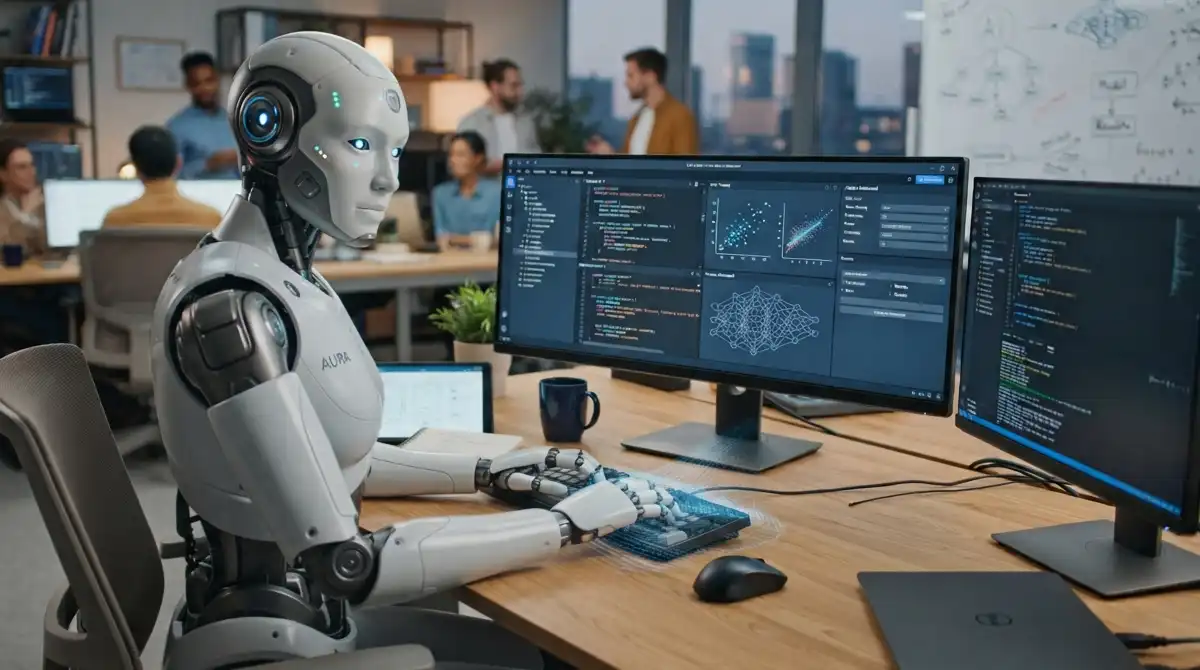
By early 2026, AI-generated images were passing casual human evaluation as photorealistic more than 70% of the time — a threshold that’s made “which AI image tool is best” a genuinely harder question than it was even a year ago, because most of the leading tools are now good enough that the real differentiator is fit, not raw quality. At least 30 credible models are competing for attention, new ones ship monthly, and every one of them claims to be the best. Best at what is the question worth actually answering.
This guide skips the hype and breaks down the tools that consistently show up as genuinely strong across independent 2026 testing, what each one is actually best at, what it costs, and which one fits your specific use case — because a model that excels at photorealistic portraits can produce mediocre logos, and the cheapest option can end up costing more in wasted regenerations than a pricier one that gets it right the first time.
How We Evaluated These Tools

Every tool here had to show up consistently across multiple independent 2026 comparisons, not just one vendor’s own claims, since this space moves fast enough that a single outdated review can mislead badly. Given how frequently model version numbers change — several tools shipped multiple major updates within 2026 alone — we focus on durable strengths by model family rather than treating any specific version number as a permanent fact.
The Landscape at a Glance
| Tool | Best Known For | Starting Price | Best For |
|---|---|---|---|
| Midjourney | Artistic, stylized aesthetic quality | ~$10/month | Designers, artists, stylized concept art |
| GPT Image (via ChatGPT) | Prompt accuracy, conversational iteration | Included with ChatGPT Plus, $20/month | Marketers, beginners, fast iteration |
| Flux (Black Forest Labs) | Photorealism, open-weight flexibility | ~$0.003–$0.07/image via API | Developers, high-volume product workflows |
| Ideogram | Text rendering inside images | Free tier available | Posters, ads, anything needing readable in-image text |
| Adobe Firefly | Commercially safe licensing | Free tier, paid plans available | Enterprise and commercial use requiring licensing clarity |
| Google Imagen / Gemini (Nano Banana) | Native multimodal generation, strong free tier | Free (20 generations/day) | Budget-conscious users, Gemini/Workspace users |
| Stable Diffusion | Full local control, zero per-image cost | Free (self-hosted) | Privacy-focused users, developers, high-volume needs |
Midjourney: Still the Aesthetic Quality Leader
Across nearly every independent 2026 comparison, Midjourney retains a genuine, largely uncontested advantage in one specific area: stylized, high-aesthetic, compositionally distinctive output. It’s the tool most frequently described as producing the most visually striking images with the least prompt engineering required — a real practical advantage for users who don’t want to learn detailed prompt syntax to get a polished result.
The tradeoffs are structural rather than about quality. Midjourney’s workflow runs primarily through Discord for individual users, with a separate web app for paying users, and it lacks broad API access for most use cases — meaning it fits poorly into automated pipelines or product integrations compared to API-first alternatives like Flux.
Best for: designers, artists, and content creators who prioritize aesthetic polish and are comfortable with (or actively prefer) Midjourney’s distinctive visual signature over photorealistic neutrality.
GPT Image (via ChatGPT): The Best Starting Point for Most People
OpenAI’s image generation, accessed through ChatGPT, consistently ranks as the strongest choice for prompt accuracy and conversational iteration — you describe what you want, see the result, and refine it through natural back-and-forth without learning complex prompt syntax. That conversational workflow is the single biggest practical advantage over Midjourney’s more prompt-engineering-dependent process.
Worth knowing directly: OpenAI’s image model lineup has changed meaningfully within 2026 itself, with the original DALL-E models phased out of the API in favor of a newer GPT Image family — a reminder that even the biggest players in this space are iterating fast enough that specific model names age quickly. The practical downside across the GPT Image family is speed and volume: it generates one image at a time and runs slower than diffusion-based models like Flux, which matters for high-volume workflows specifically.
Best for: marketers needing fast, accurate concept visuals, and anyone who wants a conversational, no-prompt-engineering-required workflow — especially if you’re already paying for ChatGPT Plus, since image generation comes bundled at no extra cost.
Flux: The Open-Weight Champion for Developers
Flux, from Black Forest Labs, is the model consistently cited as the strongest choice for anyone building image generation into a product or needing high-volume output without a subscription cap. It delivers photorealism competitive with Midjourney at a fraction of the per-image API cost — commonly cited in the range of roughly $0.003 to $0.10 per image depending on the specific variant and hosting provider — and its open-weight architecture means it can be run locally or fine-tuned for custom styles more accessibly than closed competitors.
The model family includes multiple tiers (fast/lightweight versions alongside premium “Pro” quality options), letting developers trade speed against quality deliberately rather than accepting a single fixed tradeoff the way most subscription-based tools require.
Best for: developers integrating image generation into their own products, and any high-volume workflow where per-image API cost matters more than a polished no-code interface.
Ideogram: Unmatched for Text Inside Images
This is the clearest single-purpose winner in the entire comparison. Ideogram generates readable text inside images with roughly 90% accuracy, compared to around 30% for Midjourney on the same task — a massive, consistently cited gap that makes Ideogram the default choice the moment a project actually needs legible in-image text: posters, ads, product mockups, or any visual where wording is part of the design itself.
Best for: any project where text needs to render accurately inside the generated image — a need most other AI image tools still handle poorly regardless of their strength elsewhere.
Adobe Firefly: The Commercially Safe Choice
Firefly’s distinguishing strength isn’t raw output quality — it’s licensing clarity. Adobe has positioned Firefly specifically around commercial-use safety, trained to minimize copyright risk in ways that matter directly to enterprise users and any business that needs to defend its use of AI-generated imagery in a commercial context.
That positioning matters more than it might seem for business use specifically, since several competing models carry real ambiguity around training data provenance that Firefly’s commercial licensing framing is built to address directly.
Best for: businesses and enterprise teams where commercial licensing clarity is a genuine requirement, not just a nice-to-have.
Google Imagen / Gemini: The Strongest Free Tier
Google’s image generation, accessible through Gemini, offers one of the most generous free tiers in the category — around 20 daily generations at no cost, with output quality that independent testing describes as exceeding other no-cost options like Bing Image Creator on most prompt types. For budget-conscious users or anyone testing whether AI image generation fits their workflow before committing to a paid tool, this is a genuinely strong, no-risk starting point.

Best for: budget-conscious users, and anyone already inside the Google/Gemini ecosystem who wants native multimodal generation without adding a separate subscription.
Stable Diffusion: Full Control, Zero Per-Image Cost
Stable Diffusion remains the default choice for anyone who wants complete control, full privacy, and zero per-image cost once local hardware is in place. Running locally, it generates images at essentially the marginal cost of electricity, with no subscription, no usage cap, and no data leaving your own machine — a genuinely different value proposition than every hosted tool on this list.
The real cost is upfront: meaningful GPU hardware (commonly cited around 12GB+ VRAM) and the technical setup to run it, which puts a real barrier between a casual user and this option compared to any of the hosted, subscription-based alternatives.
Best for: privacy-focused users, developers who want full customization through the open community ecosystem of extensions and fine-tuned models, and anyone generating high volumes who wants to eliminate per-image cost entirely after the initial hardware investment.
“There is no single ‘best’ — pick by use case: Midjourney for hero art, GPT Image for quick iteration, Flux for product shots, Imagen for scale.” — Precision AI Academy, 2026 image generator comparison
Choosing the Right Tool for Your Actual Use Case
- Stylized, artistic hero images and concept art: Midjourney, for its distinctive aesthetic quality and minimal prompt-engineering requirement.
- Fast, conversational iteration with no prompt-engineering learning curve: GPT Image via ChatGPT, especially if you already pay for ChatGPT Plus.
- High-volume product integration or API-driven workflows: Flux, for its low per-image cost and open-weight flexibility.
- Anything requiring readable text inside the image: Ideogram, given its dramatic, well-documented accuracy advantage on this specific task.
- Commercial or enterprise use requiring licensing clarity: Adobe Firefly, for its commercial-safety-first positioning.
- Testing the waters with zero budget: Google Imagen via Gemini, for the most generous genuinely free tier in the category.
- Full privacy, full control, and zero ongoing cost: Stable Diffusion, if you’re willing to invest in the hardware and technical setup upfront.
Where This Comparison Has Limits
A few honest caveats matter here more than in most comparisons, given how fast this specific space moves.
- Specific model version numbers will likely be outdated within months. Several tools on this list shipped multiple major updates within 2026 alone, and OpenAI’s own model lineup changed enough that specific version names referenced in older comparisons no longer apply — treat the durable, family-level strengths described here as more reliable than any specific version number.
- Quality gaps between tools are narrowing across the board. With photorealistic outputs now passing casual human evaluation over 70% of the time across multiple tools, the practical difference between top-tier options increasingly comes down to workflow fit and cost, not a dramatic quality gap.
- Pricing and free-tier limits shift frequently. Several tools have adjusted their free-tier generosity or subscription pricing within 2026 — verify current terms directly before budgeting around any specific figure here.
- No single tool wins across every dimension. The image generation frontier has genuinely fractured by use case — photorealism, text accuracy, artistic style, and commercial licensing each have a different current leader, making a single-model workflow increasingly limiting for anyone with varied creative needs.
The Bottom Line
There’s no single best AI image generation tool in 2026 — there’s a best tool for what you’re specifically trying to make. Midjourney leads on artistic, stylized output; GPT Image offers the easiest conversational workflow for most beginners; Flux wins on cost and developer flexibility; Ideogram dominates any task needing legible in-image text; Adobe Firefly answers commercial licensing concerns directly; and Stable Diffusion offers total control at zero ongoing cost for anyone willing to invest in the setup. Match the tool to the specific job rather than searching for one universal winner, and expect this landscape to keep shifting fast enough that revisiting the choice periodically is worth doing.
FAQ
What’s the best free AI image generator?
Google Imagen via Gemini currently offers one of the most generous free tiers — around 20 daily generations — with output quality that independent testing describes as exceeding other no-cost options on most prompt types.
Which AI image generator is best for text inside images?
Ideogram, by a wide and consistently documented margin — it renders readable text with roughly 90% accuracy compared to around 30% for Midjourney on the same task.
Is Midjourney or GPT Image better for beginners?
GPT Image, accessed through ChatGPT, generally has the gentler learning curve thanks to its conversational, back-and-forth refinement workflow, while Midjourney tends to reward more deliberate prompt construction to get its distinctive aesthetic results.
What’s the cheapest way to generate AI images at high volume?
Flux via API for hosted use, running as low as a few cents per image depending on the variant, or Stable Diffusion self-hosted, which eliminates per-image cost entirely after the upfront hardware investment.
Which AI image tool is safest for commercial or enterprise use?
Adobe Firefly, which is specifically positioned around commercial-use safety and licensing clarity in a way most competing models don’t emphasize as directly.