What's the Difference Between SEO and AEO?
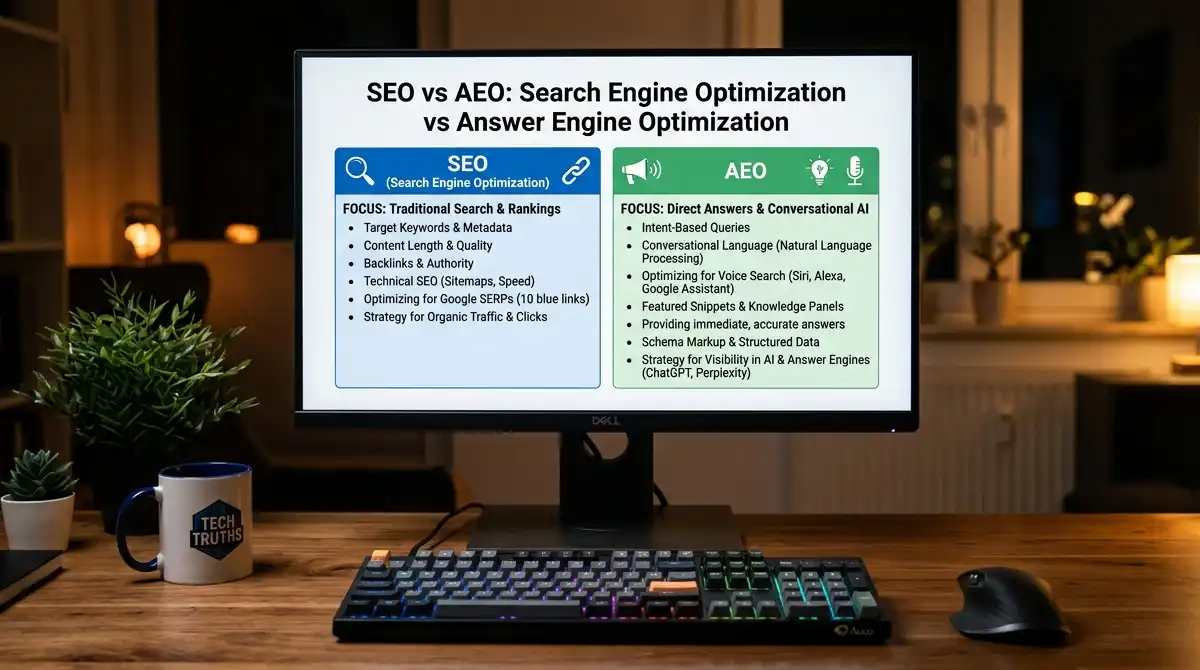
SEO vs AEO explained: SEO optimizes for rankings and clicks, AEO optimizes for AI citations. Here's how they actually differ and work together.

Talal Emran
Web Developer & Designer
Published
10 min read
Over 60% of Google searches now end without a click to any website. When an AI Overview appears above the results, the click-through rate for the page ranking first drops as much as 58%, and in some studies, users click through to a traditional result only 8% of the time. Ranking first on Google used to guarantee traffic. In 2026, it increasingly doesn’t.
That shift is the entire reason Answer Engine Optimization exists as a distinct discipline from SEO. This article breaks down exactly what separates the two, where they overlap, and why treating this as a replacement decision — dropping SEO for AEO — is the wrong framing entirely.
The One-Sentence Version
SEO is about ranking; AEO is about being cited. SEO optimizes a page to appear high in a list of search results that a person clicks through. AEO optimizes content so an AI system — ChatGPT, Perplexity, Gemini, Claude, or Google’s AI Overviews — can extract it, trust it, and cite it directly inside a generated answer, often without the person ever clicking anywhere.
That distinction sounds subtle. In practice, it changes what success looks like, what you measure, and even what counts as a “good” outcome for the same piece of content.
Why This Distinction Exists Now
Search behavior has genuinely changed, not just the interface around it. Roughly 51% of B2B software buyers now start their purchasing process with an AI tool instead of a traditional search engine, and 86% of users who do see an AI-generated summary click through to a source citation — meaning citations have become a real, trackable path to traffic, just a fundamentally different one than a ranked blue link.
The scale of the shift is why marketers can’t treat this as a minor tactic. Gartner projected traditional search engine query volume would fall 25% by 2026, and that prediction has broadly matched what’s actually happened. A brand that only optimizes for the traditional results page is optimizing for a shrinking share of how people actually find information now.
“SEO asks: how do we rank on the results page? AEO asks a different question entirely: how do we get cited inside the answer itself, whether or not anyone visits the page at all.” — a framing echoed across nearly every current AEO guide
What SEO Actually Optimizes For
Search Engine Optimization is the practice of improving a website and its content so it ranks highly in traditional search results — primarily Google and Bing. The mechanics are well established: technical site health, content quality and relevance, backlinks from authoritative sources, and on-page factors like keyword usage, heading structure, and page speed.
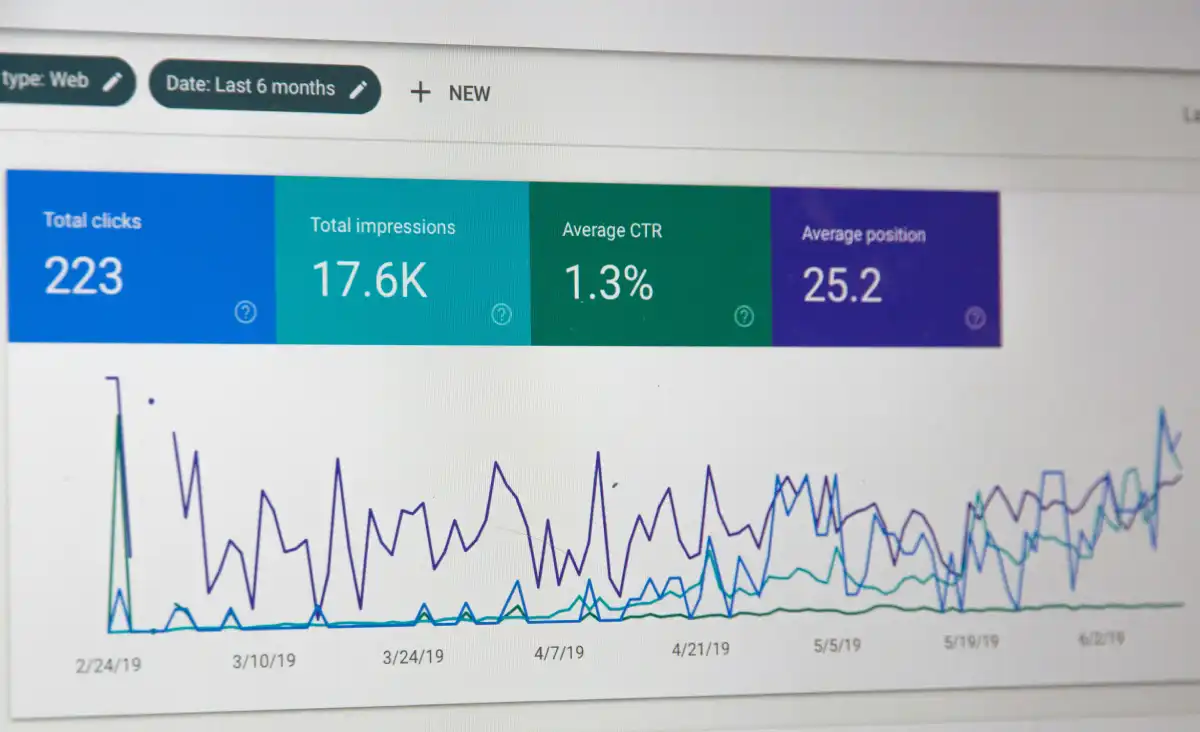
The goal of SEO, stated plainly, is clicks. A high-ranking page generates organic traffic because a person sees it in a list of results and chooses to visit. Success gets measured in organic visits, page rankings, and the leads or revenue that traffic eventually produces.
Best for: long-form content, comparison and research-stage pages, and any content type where a visitor actually needs to land on your site to complete a task — reading a full guide, using a tool, or making a purchase.
What AEO Actually Optimizes For
Answer Engine Optimization is the practice of structuring content so AI systems can extract, cite, and surface it directly inside a generated response. Where SEO helps a full page rank for a search term, AEO shapes specific sections of content so an AI system can pull and cite a precise answer — often a single paragraph or sentence, not the whole page.

The mechanics differ from classic SEO in a specific, practical way. Google’s AI Overviews rely on Retrieval-Augmented Generation: the system uses core Search ranking systems to pull relevant, current pages from its index, then generates an answer synthesized from what it retrieved. That means the page still has to rank well enough to get retrieved in the first place — AEO doesn’t skip SEO, it depends on it.
Best for: definitional content, direct-answer sections, comparison tables, and anything genuinely fact-dense — AI systems consistently prioritize content rich in verifiable, specific data points over narrative or promotional framing.
Where the Two Genuinely Overlap
The two disciplines share more infrastructure than the “SEO vs. AEO” framing suggests. Many of the same signals that help a page rank in Google also increase its odds of being cited by an AI system.
- Backlinks still matter for both. They remain a core input for a site’s overall authority, and that authority carries directly into how often an AI system trusts and cites the site.
- Brand mentions matter more for AEO specifically. Linked and unlinked references to a brand across trusted sites help AI systems recognize and prefer a recognizable name when generating an answer — this is a signal traditional SEO cared about less directly.
- Technical foundations are shared, not separate. Crawlability, site speed, and structured data are prerequisites for both — without them, an AI system can’t reliably find or index the content it would otherwise cite.
- Google has said this directly. In detailed AI optimization guidelines published in 2026, Google stated that the same core ranking and quality systems powering traditional search also power its AI features — meaning strong SEO fundamentally carries over into AI visibility, not just user rankings.
Where They Genuinely Diverge
The overlap is real, but so are the differences, and they show up clearly in how each discipline measures success and what it competes for.
| Dimension | SEO | AEO |
|---|---|---|
| Primary goal | Rank in results, earn a click | Get cited inside a generated answer |
| Success metric | Organic traffic, rankings, page position | Citation frequency, share of voice in AI answers |
| Competition model | Finite ranked positions on a results page | Not zero-sum in the same way — multiple sources can be cited together |
| Content shape favored | Full-length, comprehensive pages | Extractable, fact-dense sections and direct answers |
| Where the “win” happens | On your own site (first-party) | Across the broader ecosystem — reviews, forums, third-party mentions (closer to third-party) |
That last row matters more than it might seem. SEO has historically been a first-party game — what you control on your own website. AEO leans significantly more third-party: an AI system forms its answer partly from how a brand is discussed across the wider web — reviews, forums, comparison sites, and other sources you don’t directly control. That’s a meaningfully different kind of work than optimizing your own page.
A Concrete Example of the Difference in Practice
Take a single question: “What’s the best project management tool for a 10-person startup?”
The SEO play is a comprehensive, well-optimized comparison article ranking on page one, earning the click, and converting the visitor once they land on the page — success measured by that visit and what happens after it.

The AEO play is having your product mentioned by name, with a clear, specific reason, inside the AI-generated answer someone gets without ever visiting a website at all — success measured by whether you’re one of the tools named, not whether anyone clicked through to read about it.
Both outcomes are valuable. They’re just different outcomes, measured differently, and increasingly, a business needs to compete for both simultaneously rather than picking one.
Why This Isn’t a Replacement Decision
The most common mistake in this conversation is framing it as a choice — abandon SEO, switch fully to AEO. That’s the wrong question. AEO relies on SEO’s technical infrastructure to function at all: without crawlability, site speed, and structured data, an AI model can’t find or index the content it would otherwise cite. SEO is the foundation; AEO is what gets built on top of it, not a separate structure replacing it.
The data backs this up directly. Despite all the disruption, 27% of marketers still rank SEO as their single highest-ROI marketing channel — strong traditional SEO continues to deliver, even as the destination for that traffic diversifies into both click-through visits and AI citations.
Where This Comparison Has Limits
A few honest caveats belong here, since this space moves fast and gets oversimplified often.
- Measurement tooling for AEO is still maturing. Tracking citation frequency and AI-answer share of voice is a newer discipline than standard rank tracking, and the tooling ecosystem, while growing quickly, isn’t as mature as traditional SEO analytics yet.
- Not every AI system behaves the same way. Google’s AI Overviews, ChatGPT, Perplexity, and Gemini each have different retrieval and citation logic — a strategy that improves visibility on one doesn’t guarantee the same result on another.
- The zero-click trend affects industries unevenly. Categories with straightforward factual questions see more AI-answer displacement than categories requiring nuanced, ongoing engagement — the urgency of an AEO strategy genuinely varies by industry.
- This is a fast-moving area, and current guidance will age. Google’s own AI optimization guidelines were only published in 2026 — treat specific tactical advice here as current, not permanent, and expect meaningful shifts within the next year or two.
The Bottom Line
SEO and AEO aren’t competing strategies — they’re two layers of the same visibility problem, measuring two different outcomes from the same underlying content investment. SEO gets a page ranked and clicked; AEO gets a specific answer extracted and cited, sometimes without a click at all. The businesses navigating this well in 2026 aren’t choosing between the two. They’re building the SEO foundation that makes AEO possible, then structuring content specifically to earn both a ranking and a citation from the same piece of work.
FAQ
Do I need to choose between SEO and AEO?
No — they’re complementary, not competing. AEO depends on SEO’s technical foundation to function, since AI systems retrieve and generate answers from the same indexed, ranked content that traditional SEO makes discoverable in the first place.
How is success measured differently between the two?
SEO success is measured in organic traffic, rankings, and the leads or revenue that traffic produces. AEO success is measured in citation frequency and share of voice inside AI-generated answers, which often happens without any click at all.
Does ranking well in Google still matter if AI Overviews are taking clicks?
Yes — Google has stated the same core ranking and quality systems that power traditional search also power its AI features, and content needs to rank well enough to be retrieved before it can ever be cited in an AI answer.
What kind of content performs best for AEO specifically?
Fact-dense, clearly structured content — direct answers, comparison tables, and definitional sections — since AI systems consistently prioritize verifiable, specific data points over narrative or promotional framing.
Is AEO only relevant for certain industries?
It matters more for categories with straightforward, frequently-asked factual questions than for categories requiring nuanced, ongoing engagement — but the overall shift toward AI-mediated search is broad enough that most businesses should have at least a baseline AEO awareness.