How to Balance Work and Study with Flexible Gigs
How to balance work and study with flexible gigs in 2026 — the real data on hours, GPA impact, and which gig types actually fit around classes.

Talal Emran
Web Developer & Designer
Published
9 min read
Students who work fewer than 20 hours a week average a 3.13 GPA — higher than non-working students, who average 3.04. That single data point contradicts the assumption most students start with: that any job is automatically a drag on academic performance. The real relationship is about hours and structure, not whether you work at all, and that distinction is exactly why gig work — with its self-selected hours — has become the default recommendation for students trying to earn without wrecking their grades.
This guide covers how to actually balance work and study using flexible gigs: what the research says about the hour threshold that matters, which gig types genuinely bend around a class schedule versus which ones only pretend to, and a practical framework for protecting your GPA while still earning real income.
How We Evaluated This Guide
Every claim here is checked against government labor data (BLS) or peer-reviewed research where available, since this space is full of gig-platform marketing dressed up as “student advice” listicles. Earnings figures reflect realistic, expense-adjusted ranges rather than headline numbers platforms use in their own promotional material.
The Hour Threshold That Actually Matters

The core finding worth building your whole strategy around: 64% of full-time undergraduates and 86% of part-time students already work at least 20 hours a week, according to the US Department of Education. Working itself isn’t the exception — it’s the norm. What determines the academic impact isn’t whether you work, but how many hours and how much control you have over when those hours happen.
The GPA data above (3.13 for under-20-hour workers versus 3.04 for non-workers) suggests a moderate amount of structured, time-boxed work can actually correlate with better academic performance — plausibly because it forces better time management than having unstructured free time does. But that relationship doesn’t hold indefinitely. Separate research on students working heavier loads — averaging around 19 hours a week across retail and food service specifically — describes real tradeoffs: cut study time and downward GPA pressure once hours climb and scheduling becomes inflexible.
What this means practically: the target isn’t zero hours or maximum hours — it’s staying under roughly 20 hours a week, and prioritizing gigs where you control exactly when those hours happen rather than jobs with fixed shifts that don’t bend around exam weeks.
Why Gig Work Specifically Solves the Scheduling Problem
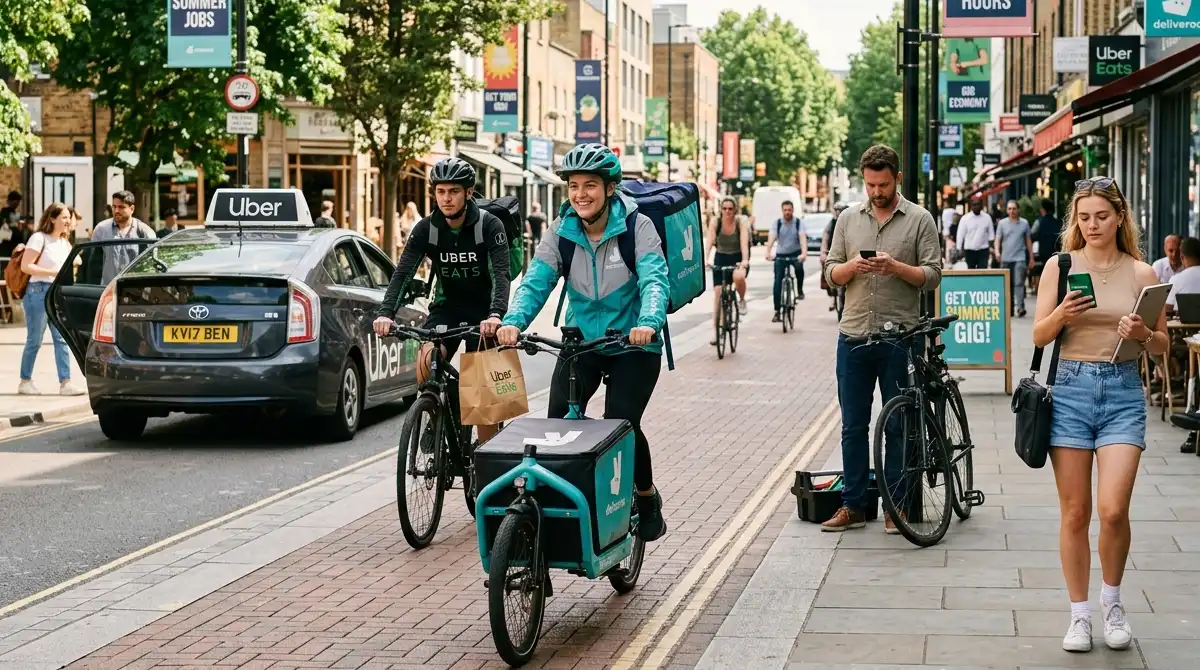
Traditional part-time jobs ask for a fixed commitment that inevitably collides with classes, study groups, and exam periods — miss a shift, face real consequences, and changing your availability usually means negotiating with a manager who has other staffing needs to balance. Gig work flips that structure entirely: you accept work during free periods and decline it when you need to study, with no roster, no shift swap, and no manager approval required.
That flexibility has genuine financial value specifically because of how unpredictable an academic schedule is. A student managing a normal semester and then an entire week consumed by finals needs an income source that can scale down to zero during that week and back up afterward — something a fixed-shift retail job structurally cannot offer.
Best for students whose academic schedule shifts dramatically week to week: delivery and task-based gig platforms, specifically because they let you scale your hours down to nothing during exam weeks without any penalty or need to request time off.
What the Different Gig Categories Actually Pay

| Gig Category | Realistic Pay | Flexibility Level | Best Fit |
|---|---|---|---|
| Food/package delivery (DoorDash, Uber Eats) | $15–$25/hr after expenses | Highest — accept/decline per order | Students with a car, bike, or scooter and unpredictable free blocks |
| Tutoring (subject-specific) | $20–$50/hr | High — set your own available windows | STEM, language, or writing-strong students |
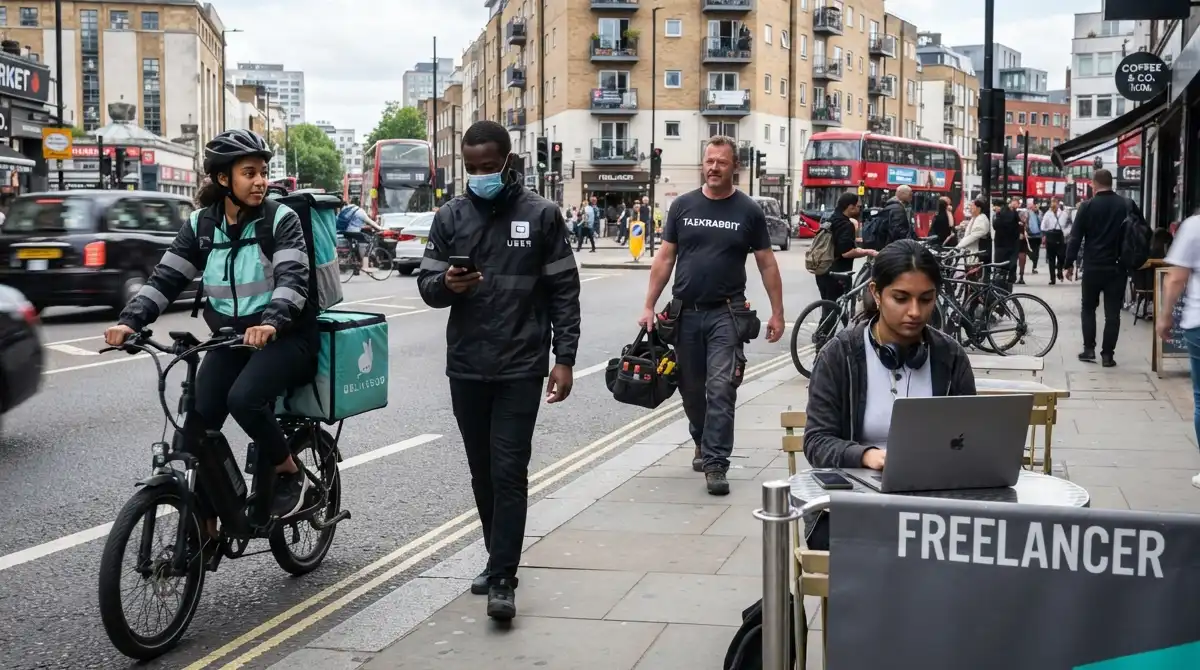
| Freelance writing/content | $15–$100+/hr based on skill | Very high — fully remote, asynchronous | Strong writers building a portfolio alongside coursework |
| Freelance design | $20–$150+/hr based on experience | Very high — fully remote, asynchronous | Design students or those with a visual portfolio |
| Freelance development | $30–$75+/hr even at entry level | Very high — fully remote, asynchronous | CS and technical majors |
| Task-based microwork (user testing, transcription) | $15–$25/hr | Highest — fits small time windows | Students with only short, scattered free periods |
Tutoring deserves particular attention here, since it’s consistently ranked as the strongest fit for students specifically — not just for the pay, which runs meaningfully higher than most other student-accessible gig work, but because it’s already directly reinforcing the same subject knowledge a student is themselves studying, rather than competing with it for mental energy.
Best for maximizing pay per hour worked: tutoring or freelance skill-based work (writing, design, development) over delivery gigs, since expense-adjusted delivery pay tops out around $25/hour while skilled freelance work can run two to four times higher for students with a genuine, marketable skill.
Best for students without a specialized skill to sell yet: delivery and task-based microwork, which require no portfolio or prior client relationships and can start generating income immediately.
The Honest Downsides Worth Planning Around
Flexibility isn’t free, and it’s worth being direct about the tradeoffs rather than only presenting the upside.
Income irregularity is real and significant. A substantial share of gig-working students — estimates run around two-thirds — report irregular income as a genuine challenge, which matters specifically for students relying on that income to cover fixed costs like rent or tuition installments. Budgeting around an average rather than a guaranteed number is a real skill this kind of work demands.
Access isn’t equal. Limited internet access and uneven digital skills create real inequality in who can actually participate in remote gig work — a structural barrier that’s easy to overlook if you’re already equipped with reliable internet and a capable device.

“Flexible” can still become fragile. Research on final-year students specifically engaged in gig work describes the arrangement as flexible yet fragile — the same scheduling freedom that protects study time during a light week can just as easily let work hours creep upward during a tight one, since there’s no external structure forcing a stop.
A Practical Framework for Balancing Both
- Set a hard weekly hour ceiling before you start, not after you’re overwhelmed. Roughly 20 hours a week is the threshold the GPA data centers around — treat it as a ceiling to defend, not a target to hit every week.
- Choose gigs that align with your coursework when possible. Tutoring your own strong subjects, or freelance writing and development work if you’re majoring in a related field, reinforces academic skills instead of competing with them for separate mental bandwidth.
- Build in an automatic scale-down for exam periods. Decide in advance — not reactively — that you’ll decline gig work during specific high-stakes weeks, since the entire value of gig flexibility is lost if you don’t actually use it to protect study time when it matters most.
- Diversify across at least two gig types if income stability matters to you. Pairing a lower-effort, immediate-pay option (delivery) with a higher-value skill-based one (tutoring or freelance work) hedges against the irregular-income problem better than relying on a single platform.
- Track your actual hourly rate, not just gross earnings. Delivery gigs in particular have real hidden costs — vehicle wear, fuel, insurance — that can make a nominally attractive per-order rate much thinner once real expenses are subtracted.
Where This Guidance Falls Short
A few honest limitations belong here, since student gig-work advice tends to oversell how manageable this actually is for everyone.
- The 20-hour GPA benchmark is a correlation, not a guarantee. Individual capacity varies significantly by course load, major difficulty, and personal circumstances — treat it as a useful reference point, not a rule that applies identically to every student.
- Not every student has equal access to the highest-paying gig categories. Freelance writing, design, and development pay significantly more than delivery work, but they require an existing skill or portfolio that not every student has built yet.
- Income instability is a genuine, not hypothetical, risk. Students relying on gig income for essential costs like rent should plan around irregular income realistically, not assume averages will hold reliably week to week.
- Flexibility requires real self-discipline to protect, not just access to it. The same scheduling freedom that helps during light weeks can quietly erode study time during heavy ones if hours aren’t actively capped in advance.
The Bottom Line
Flexible gig work genuinely solves the core scheduling conflict traditional part-time jobs create for students, and the data backs up moderate, well-structured work as compatible with — sometimes even correlated with better — academic performance. The key isn’t picking the highest-paying gig category available; it’s staying under a real hour ceiling, choosing gigs that scale down automatically during exam periods, and being honest about the income-irregularity tradeoff that comes with the flexibility. Students who balance this well aren’t working less than their peers — they’re working on a schedule they actually control.
FAQ
How many hours can a student work without hurting their GPA?
Research suggests students working fewer than 20 hours a week average a slightly higher GPA (3.13) than non-working students (3.04), while heavier weekly workloads are associated with real cuts to study time and downward GPA pressure.
What’s the highest-paying flexible gig for students?
Tutoring and skilled freelance work (writing, design, development) consistently pay more than delivery gigs — tutoring commonly runs $20–$50 an hour, while specialized freelance work can reach $75–$150+ an hour for students with real experience or a portfolio.
Is delivery gig work actually worth it for students?
Yes, particularly for students without a specialized skill to sell yet — it requires no portfolio, pays $15–$25 an hour after real expenses, and offers the highest per-order flexibility of any gig category, though the pay ceiling is lower than skilled freelance work.
What’s the biggest downside of relying on gig income as a student?
Income irregularity — roughly two-thirds of student gig workers report irregular income as a real challenge, which matters most for students depending on that income to cover fixed costs like rent or tuition.
Should students avoid gig work entirely during exam periods?
Not necessarily avoid it entirely, but plan a deliberate scale-down in advance — the core value of gig work’s flexibility is protecting study time during high-stakes weeks, which only works if hours are actually reduced rather than left to chance.